Al Hammadi: Four years designing — and re-designing — the patient app for one of Saudi Arabia's largest private healthcare networks.
I've been the sole product designer on the Al Hammadi patient app since 2021 — first shipping the original release, then leading its full ground-up redesign in 2024. It's the primary digital touchpoint for patients across Al Olaya, Al Suweidi, Al Nuzha and Al-Kharj. This second generation trades a dense, records-first interface for a warm, patient-first experience that turns bookings, reports, prescriptions and health packages into confident one-tap moments — in Arabic and English.

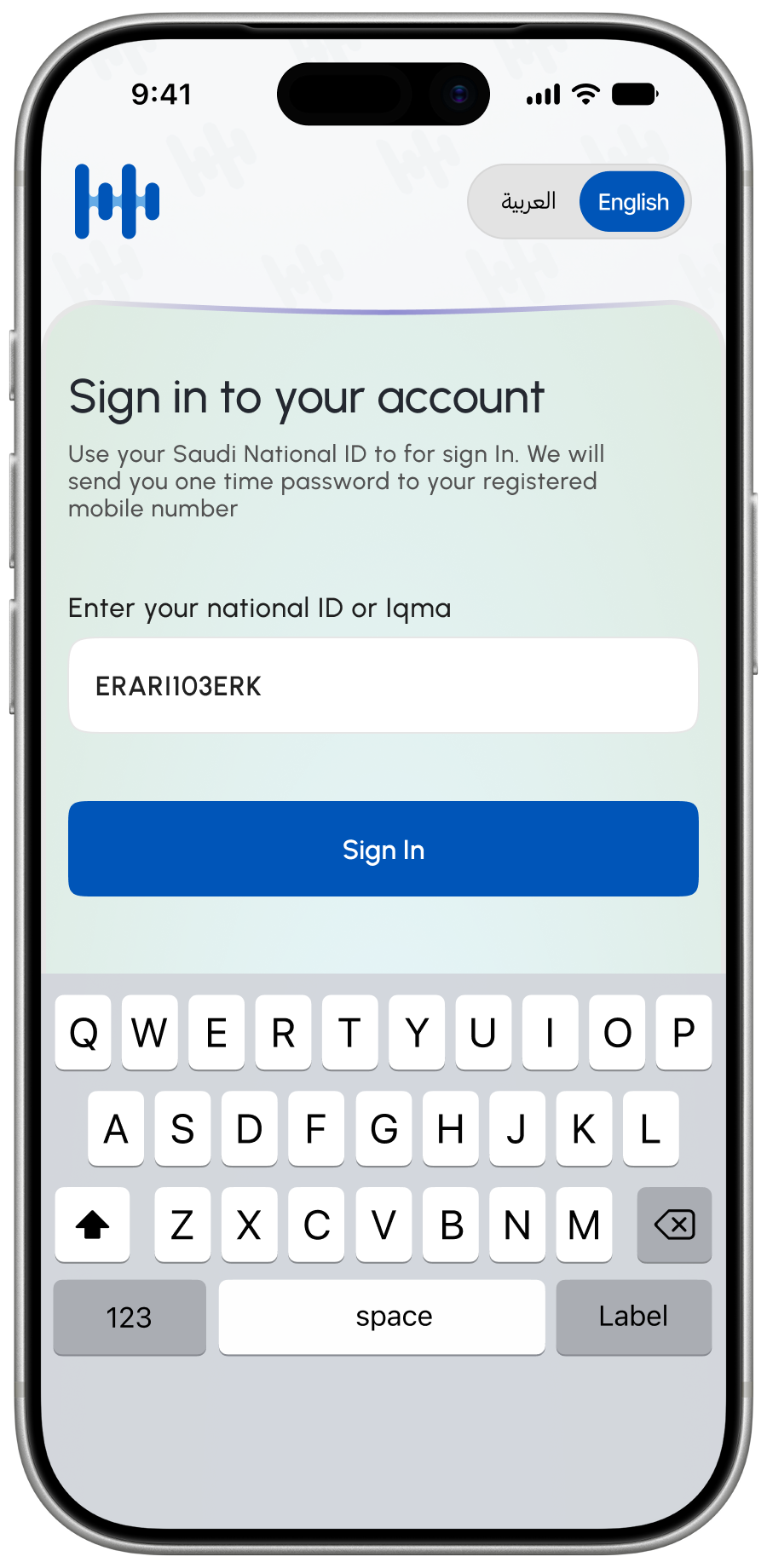
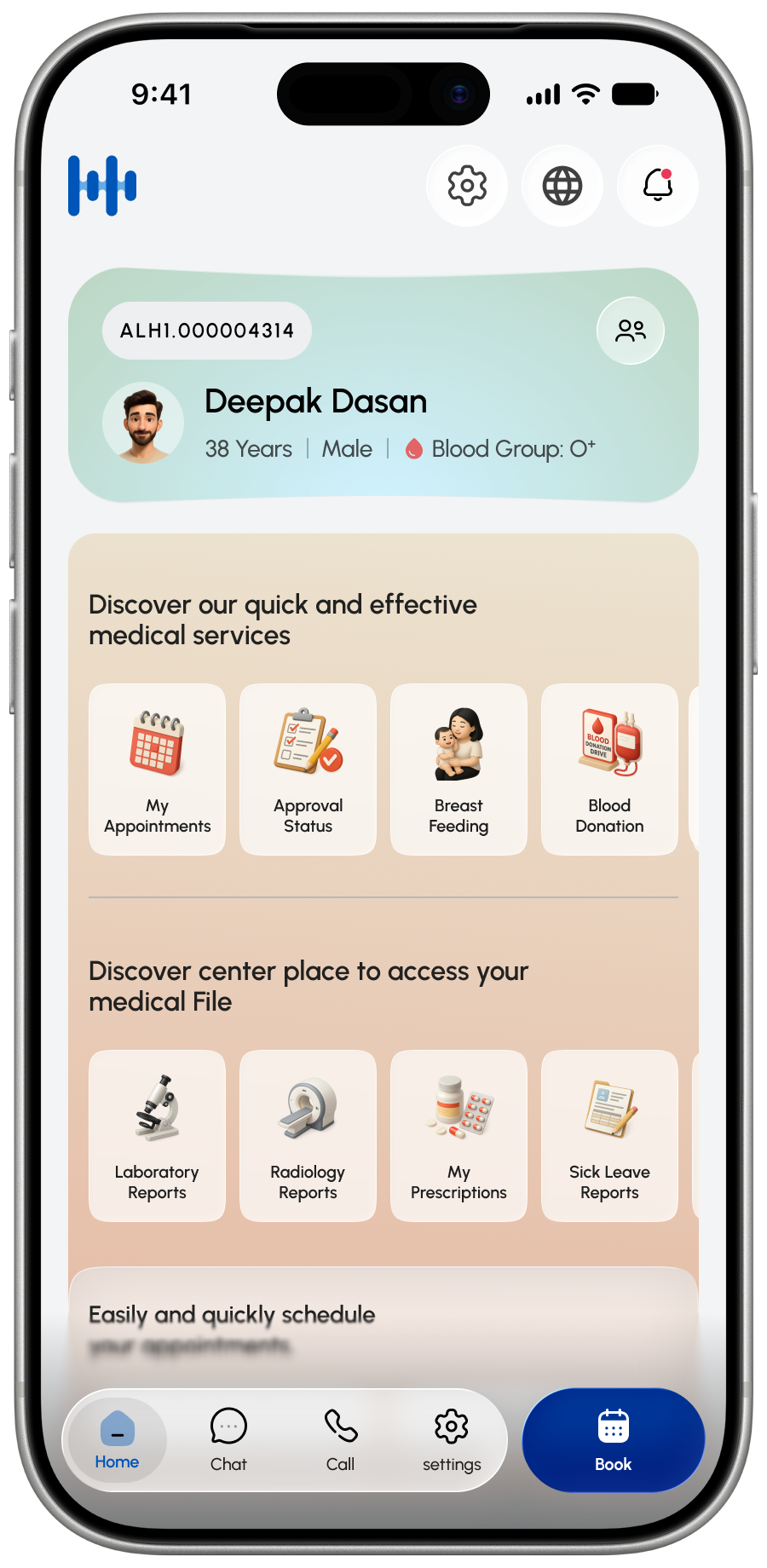
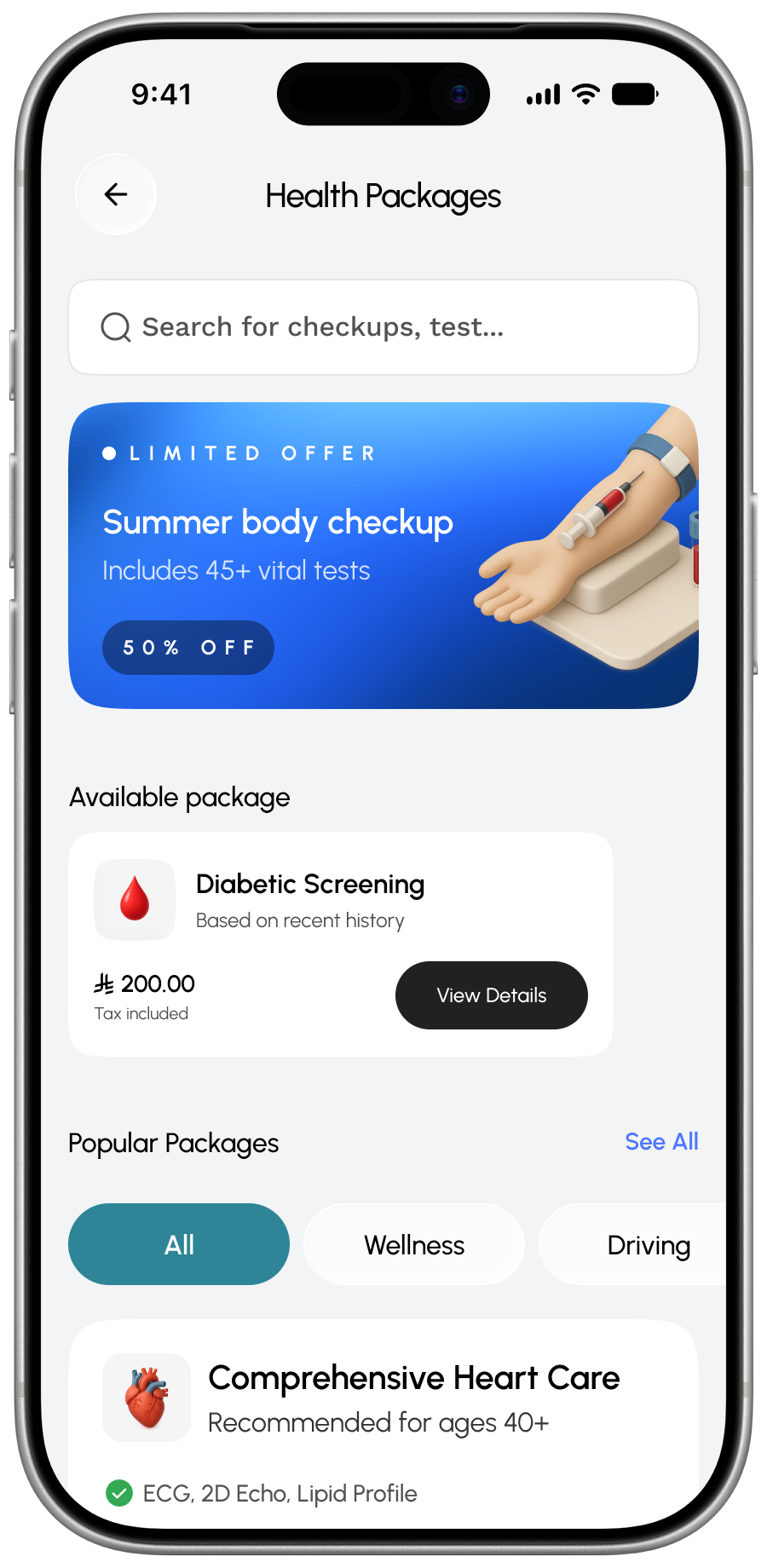
New patient app — sign-in, home, health packages and package details
Impact
What moved, and by how much.
Play Store installs across Saudi Arabia
Full bilingual parity with mirrored RTL layouts
One app across Al Olaya, Al Suweidi, Al Nuzha and Al-Kharj
Appointments, reports and prescriptions from the home screen
01 · Context
The v1 I shipped in 2021 — and what three years of patient feedback taught me.
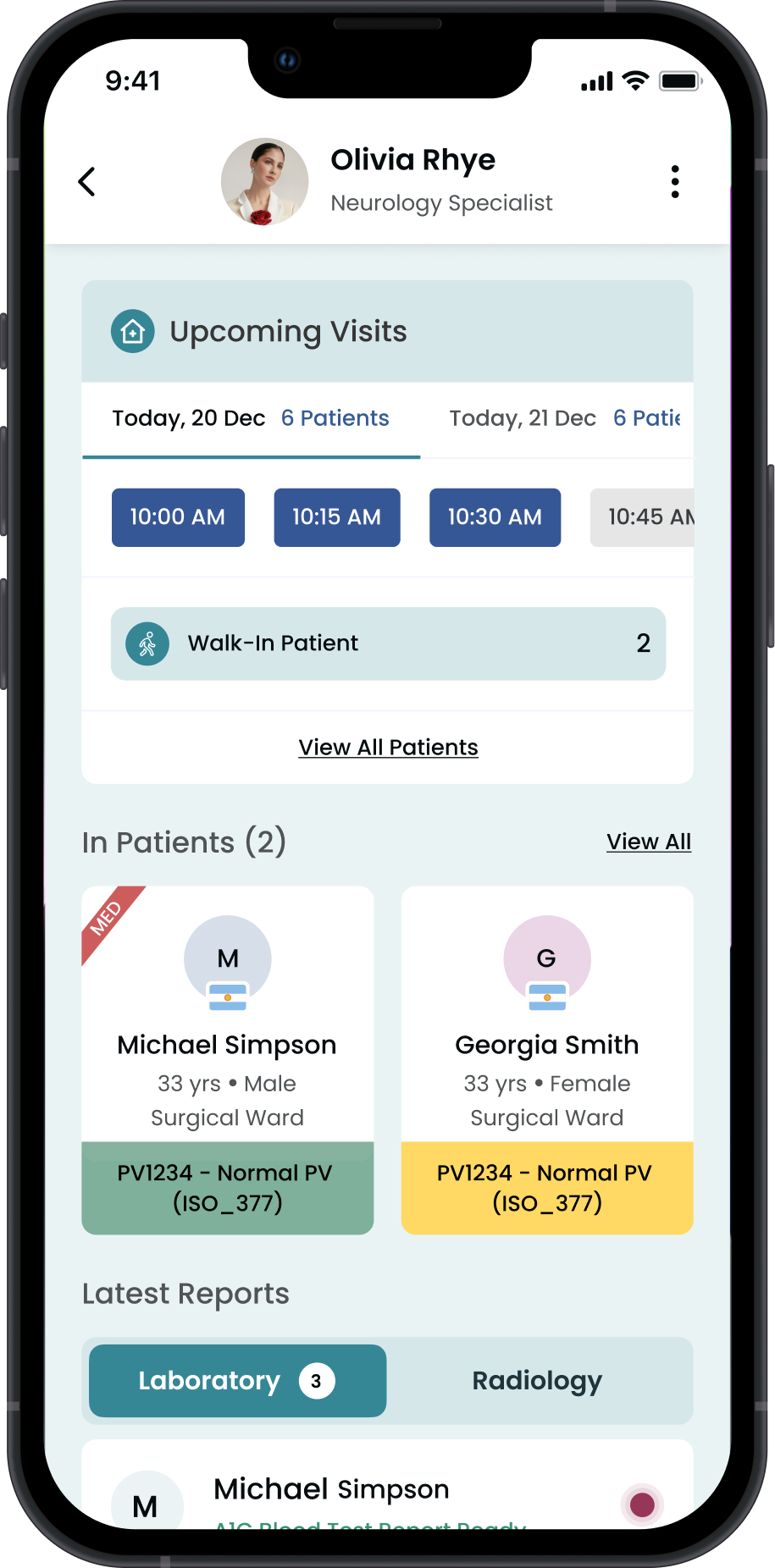
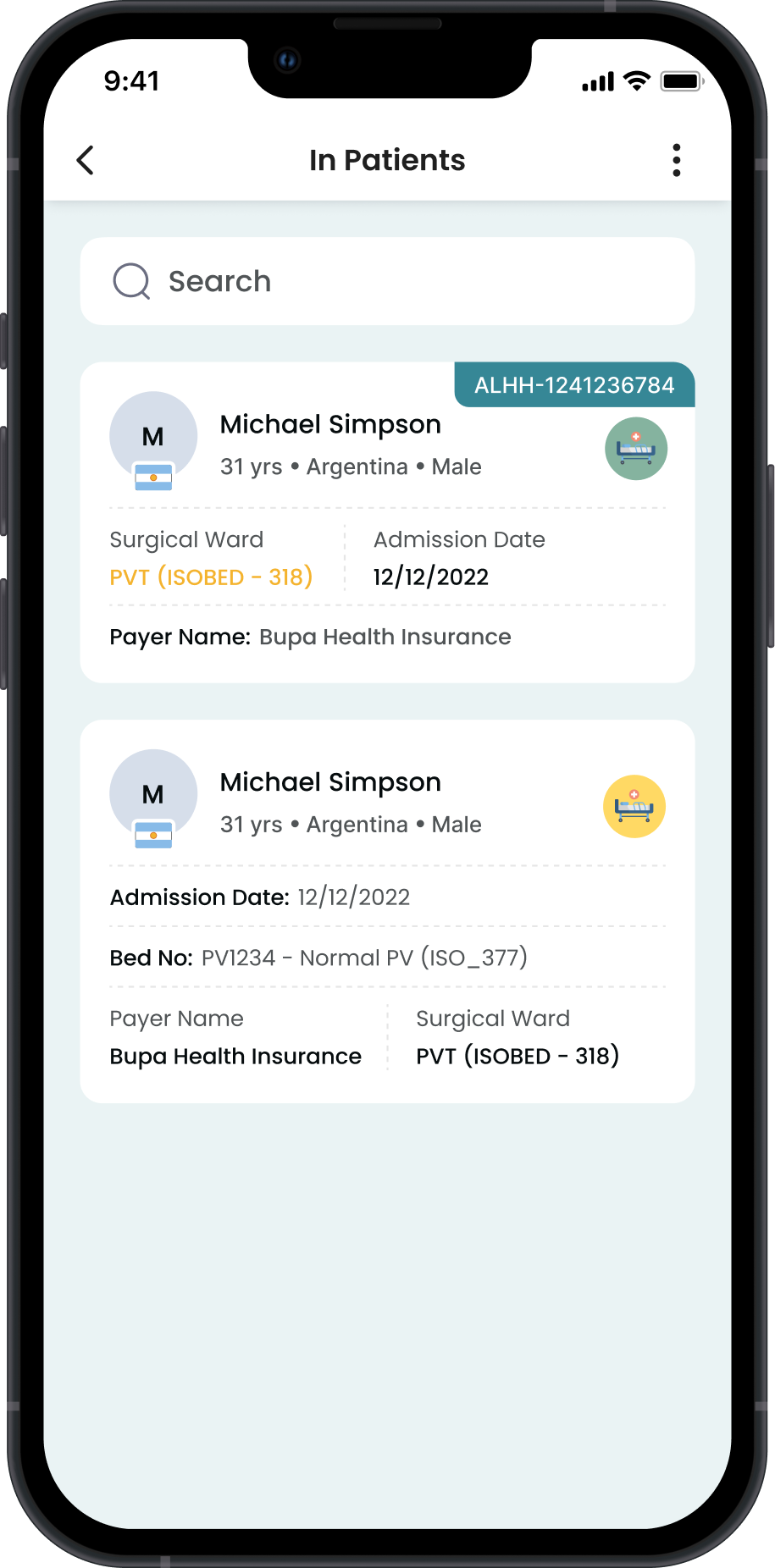
Al Hammadi Hospitals is one of Saudi Arabia's largest private healthcare networks — four hospitals, a medical company, and services spanning outpatient, inpatient, emergency, day surgery, home health, health packages and community blood-donation drives. I shipped the first version of the app in 2021, working closely with clinical operations, and it did its job — but three years of live usage, App Store reviews and hospital-floor observation made the ceiling clear. The v1 I built leaned clinician-first: dense cards, hospital-record language, English-led type. Patients kept asking for something warmer and faster, and I agreed.
- Ward-desk vocabulary (Bed No, ISOBED, Payer Name) surfaced ahead of what patients actually opened the app for
- Bilingual EN/AR handled as translation on top of an LTR layout — not a true RTL system
- Bookings buried inside multi-step forms instead of a one-tap entry point
- Health packages and community initiatives (like blood-donation drives) had no home in the app
- Visual language was clinical and grey — trustworthy, but not warm
v1 (2021, my own design) — clinician-styled patient views
02 · Approach
Rebuild around the home screen the patient actually opens.
Coming back to the same product four years later, I had the advantage of knowing exactly what patients used and what they ignored. I anchored the redesign in the four things they actually open the app for — booking a visit, checking reports, refilling prescriptions, and joining community programs. Everything else moved down a level. Sign-in became one field (Saudi National ID or Iqama) with an OTP. The home screen leads with the patient card, then two clean sections: quick medical services and access to the medical file. A persistent bottom bar keeps Home, Chat, Call, Settings and Book one tap away.
- Warm, illustrated iconography instead of clinical iconography
- Bilingual EN/AR system with mirrored RTL layouts, not string swaps
- Health Packages surfaced as a first-class flow — search, offers, details, categories
- Blood-donation drive alerts modelled as urgent, dismissable modals with a Share Now CTA
- Home dashboard reorganised into “Discover our quick and effective medical services” and “Discover center place to access your medical file”
v2 (2024 redesign) — patient-first flows
03 · Health Packages
A shop for well-being, not a menu of tests.
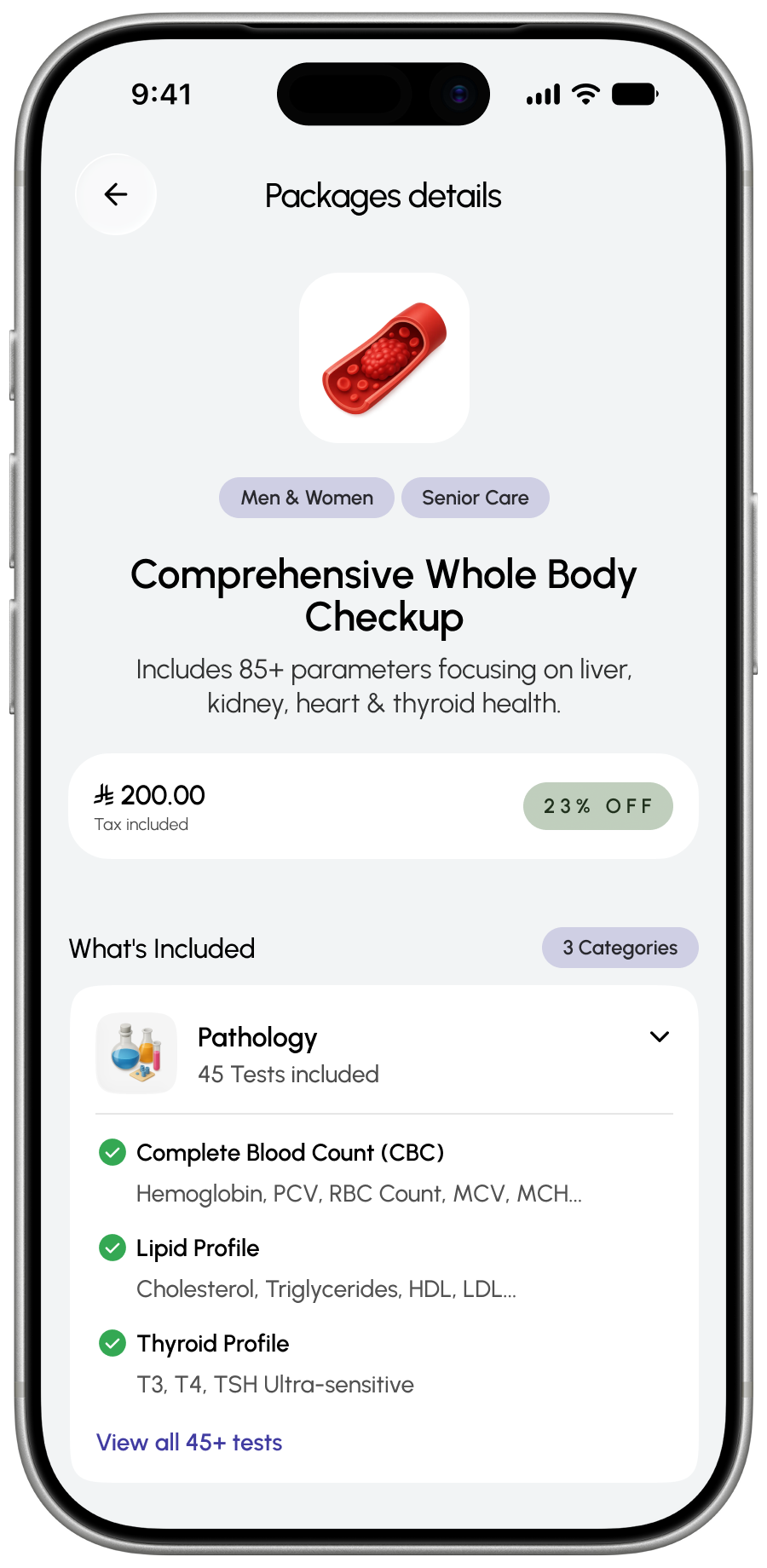
Al Hammadi runs seasonal check-up campaigns — Summer body checkup, Diabetic screening, Comprehensive Heart Care. In the old app they were static PDFs. In the new app they behave like a considered retail flow: a searchable listing with limited-offer hero, a details page that leads with visuals and price, and a transparent “What’s Included” breakdown by category.
- Hero-first package details with tags for audience (Men & Women, Senior Care)
- Price with tax-included clarity and a distinct offer chip
- Expandable category cards showing every included test
- Popular Packages carousel with filters (All, Wellness, Driving)
“The new app finally sounds like the hospital talking to a patient — not a records system talking to itself.”
Al Hammadi — Product team
Key takeaways
What I'd carry forward.
Design the four things patients open for
Book, reports, prescriptions, community. Everything else earns its way onto the home screen.
Bilingual is a system, not a translation
RTL mirroring, Arabic type ramps and mirrored iconography have to land in the same design pass as EN.
Warmth is a clinical feature
Illustrated icons and softer surfaces made health services feel approachable without losing trust.