Coherent: Insurance tooling that let actuaries ship product changes in days, not quarters.
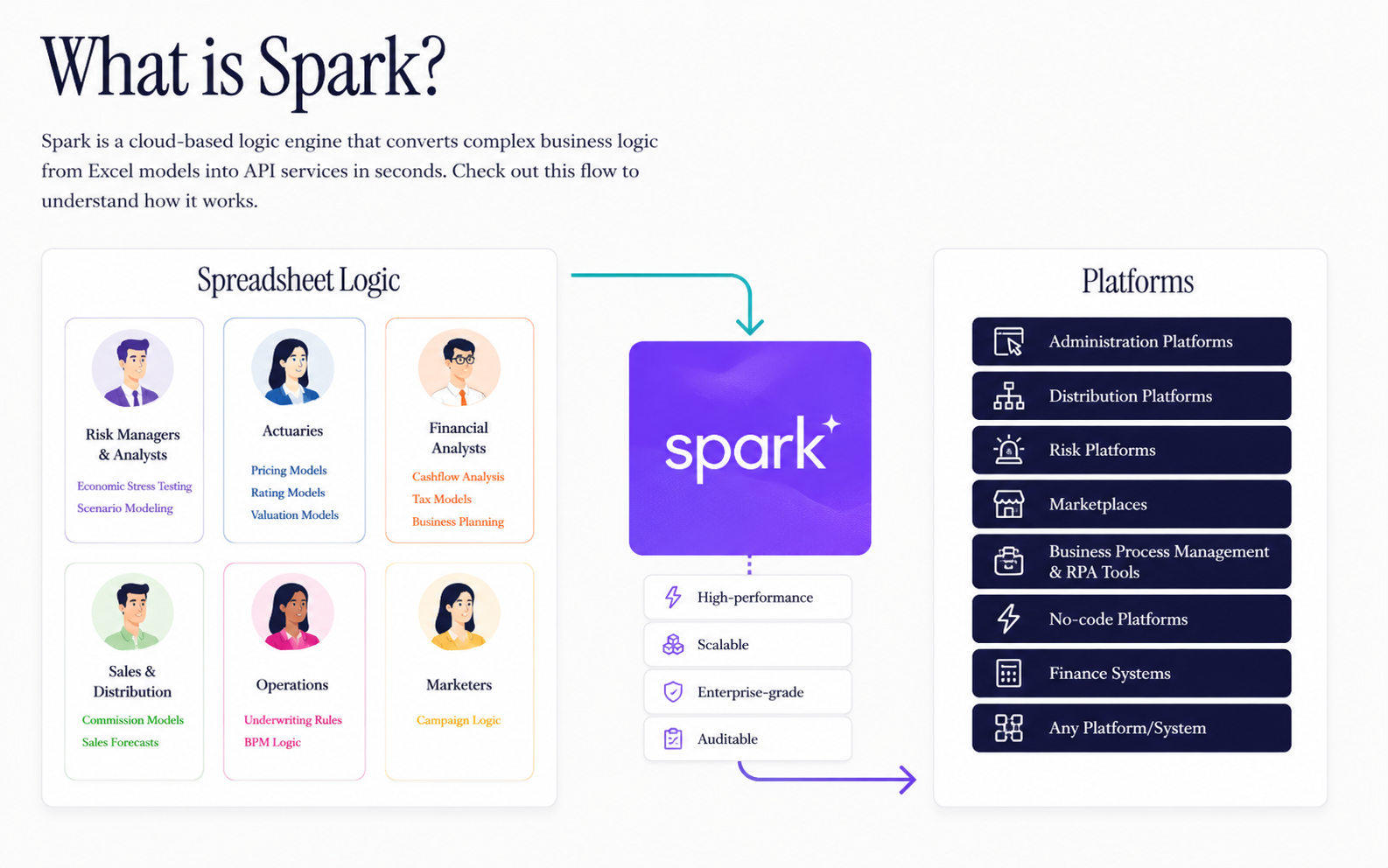
Coherent Spark converts the business logic inside Excel models into cloud API services. I designed the workflows that made that trustworthy for non-engineers — an in-Excel Modelling Center for mapping and testing models, and the publishing surfaces on the Spark web platform that added versioning, validation and approval without breaking the spreadsheet mental model.
Context
The spreadsheet was the product.
Respecting an expert-user model
Actuaries lived in Excel. Every insurance product change ran through a spreadsheet, then a manual engineering ticket. The design problem wasn't replacing that mental model — it was adding version control, review and audit without breaking the trust that made spreadsheets feel safe.
- Actuaries author, engineers deploy — long cycle time
- PR-style review felt alien to actuarial workflow
- Cell-level trust is non-negotiable in regulated products
- Every change needs a defensible audit trail
01 · Research
What we needed to learn.
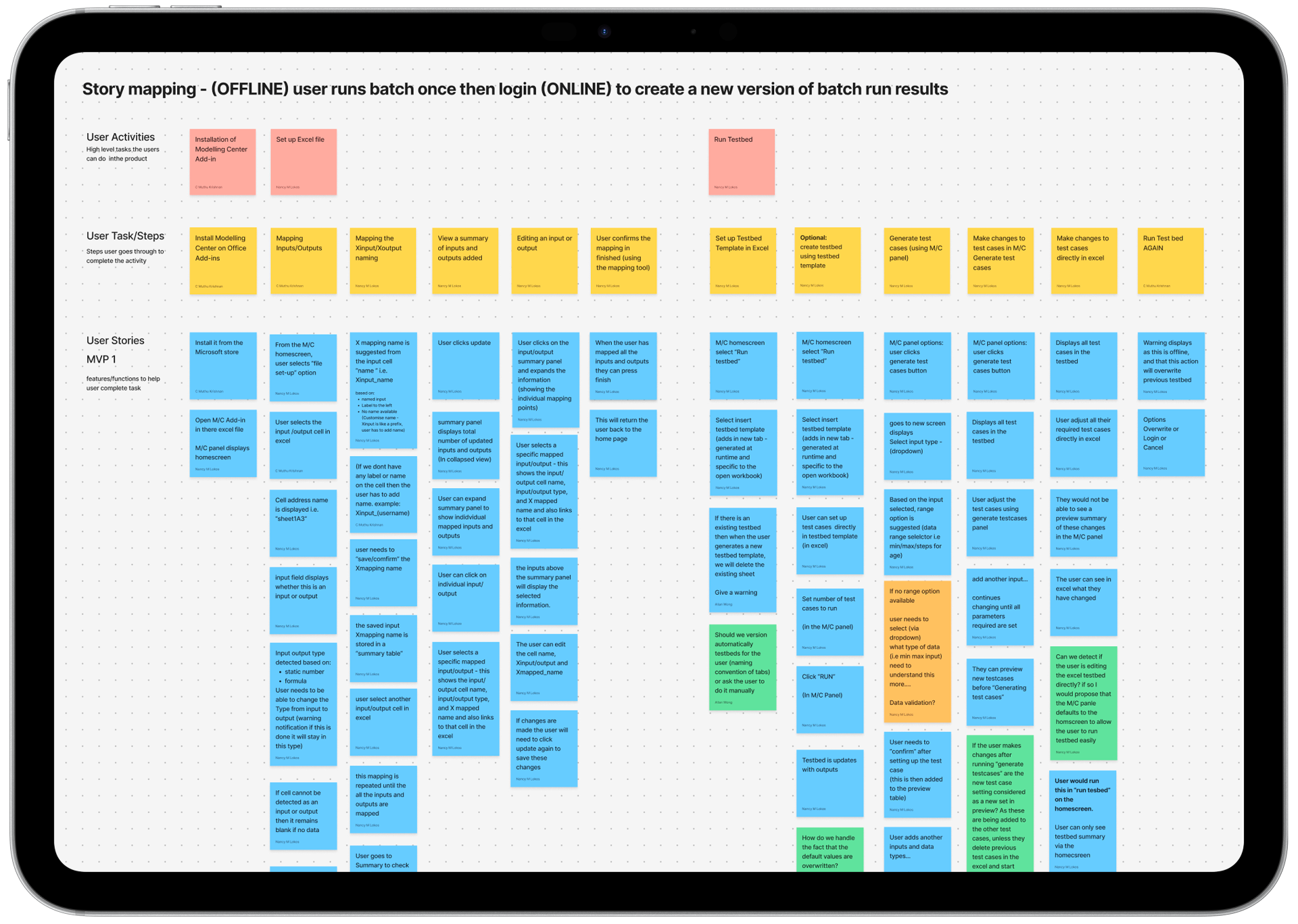
Contextual inquiry with three actuarial teams across APAC. Co-design workshops to test which review and approval rituals were welcomed versus resisted. Prototype benchmarking to quantify error rate against free-form editing.
- 3 embedded contextual inquiries
- Co-design workshops on review patterns
- Prototype benchmark vs free-form editing
- Pilot analytics — cycle time & escalations
02 · Decisions
Finding → intervention.
03 · Design
Three surfaces that carried the workflow.
Surface A
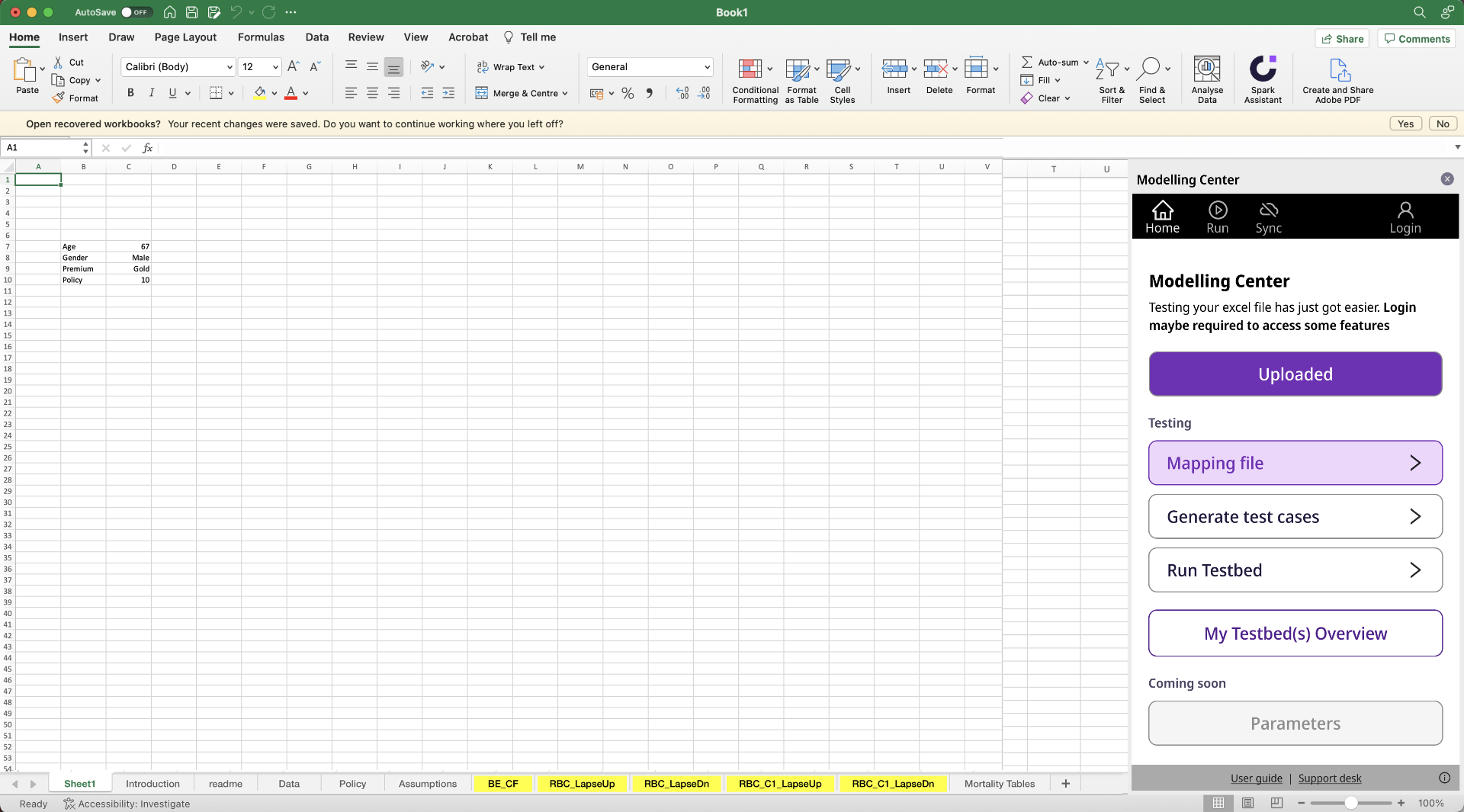
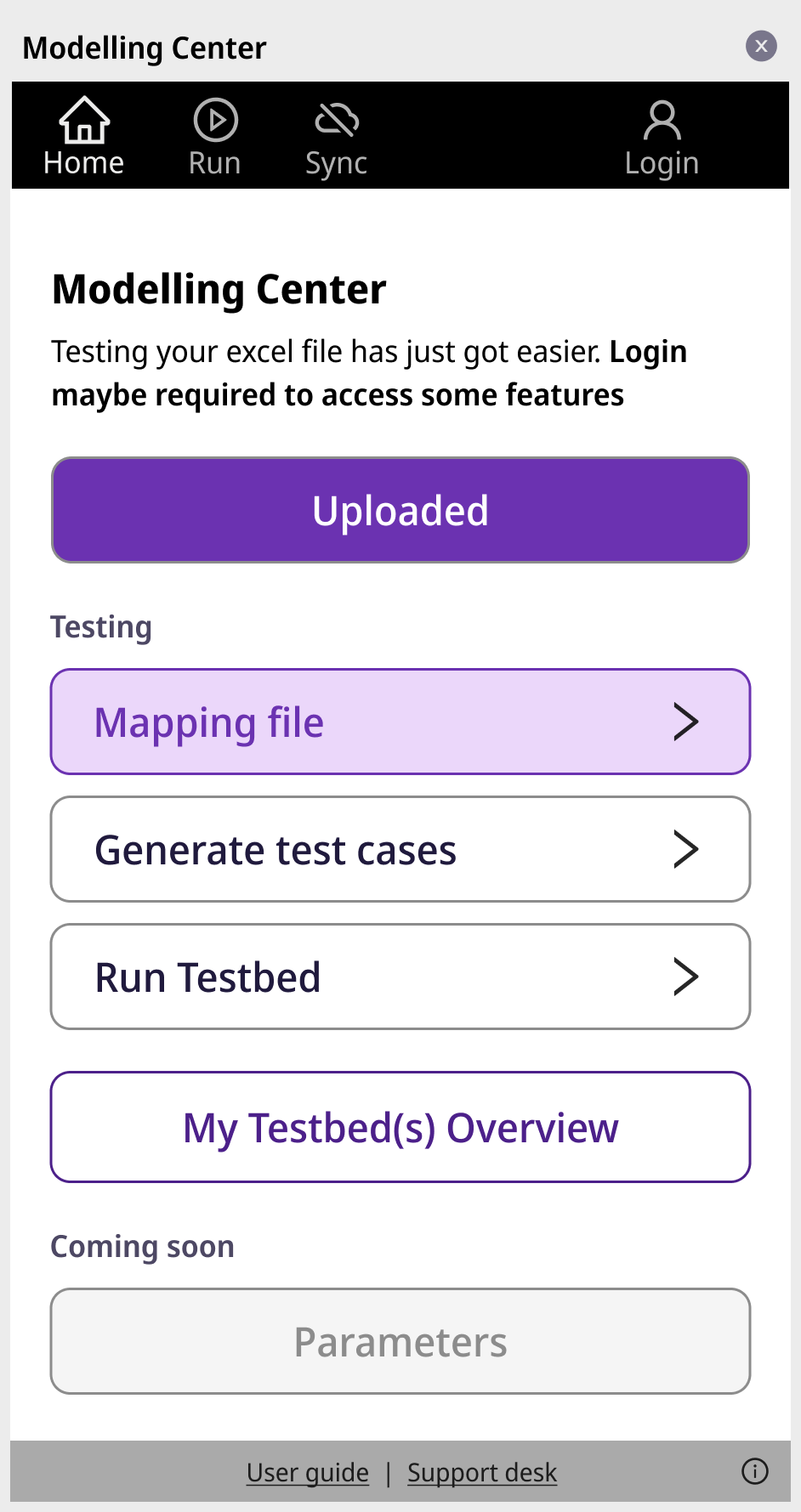
Testing without leaving Excel
The Modelling Center reads top-to-bottom in execution order — Mapping file → Generate test cases → Run Testbed — with the current step highlighted and upload status as a live signal. The layout is the workflow. Features not yet shipped ("Parameters") appear visibly disabled under "Coming soon" rather than hidden — honest roadmap signaling that compliance-minded users valued.
Surface B
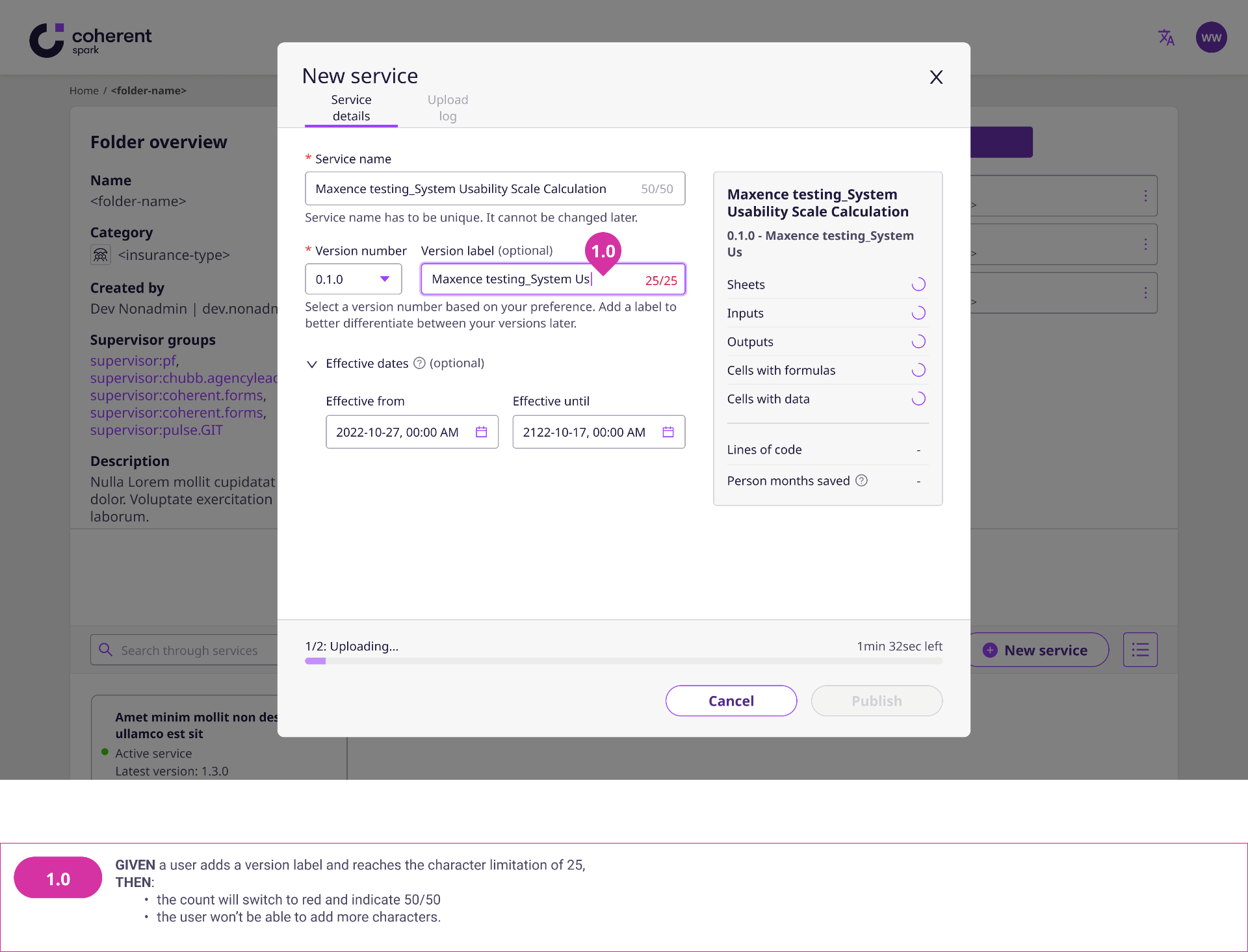
Guided publishing with live validation
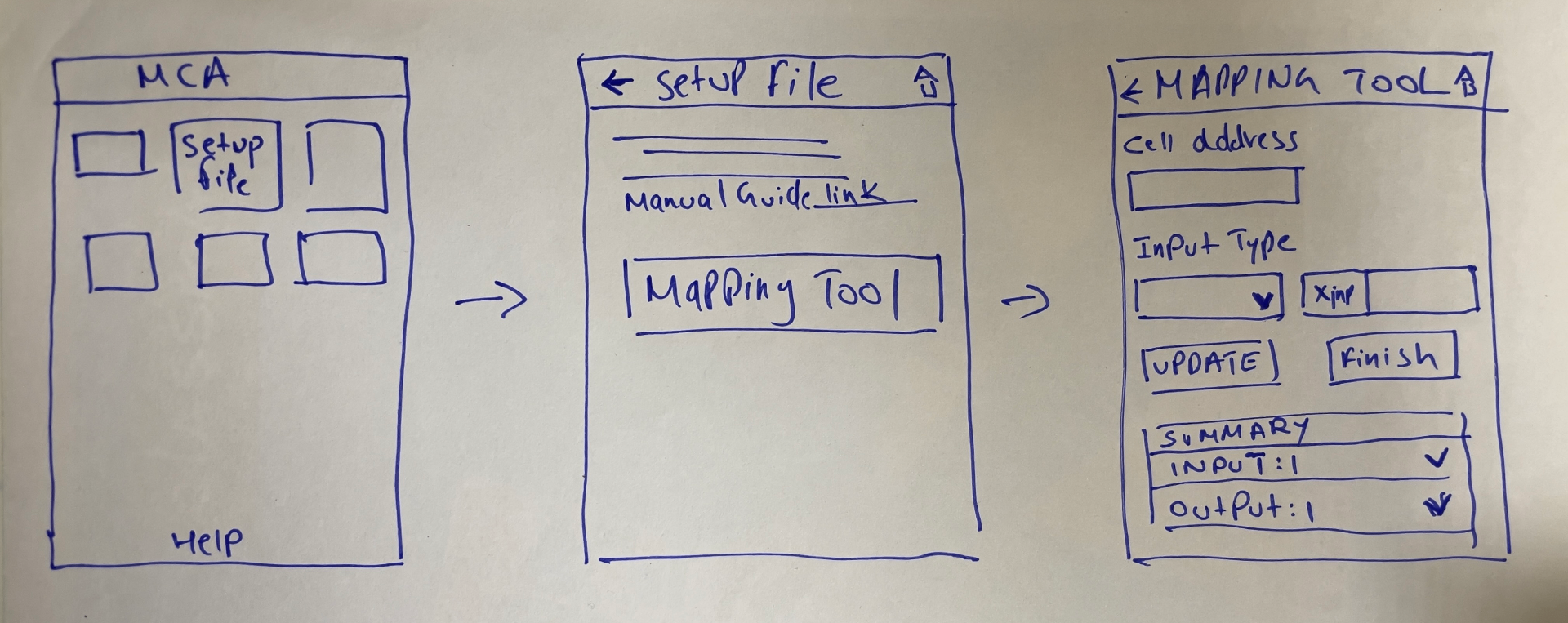
Publishing a model as a service is guarded by structured inputs — unique service names, semantic version numbers, character-limited labels with live counts, effective date ranges — each behaviour written as a GIVEN/THEN spec for engineering. Guardrails at authoring time, not error messages after.
Surface C
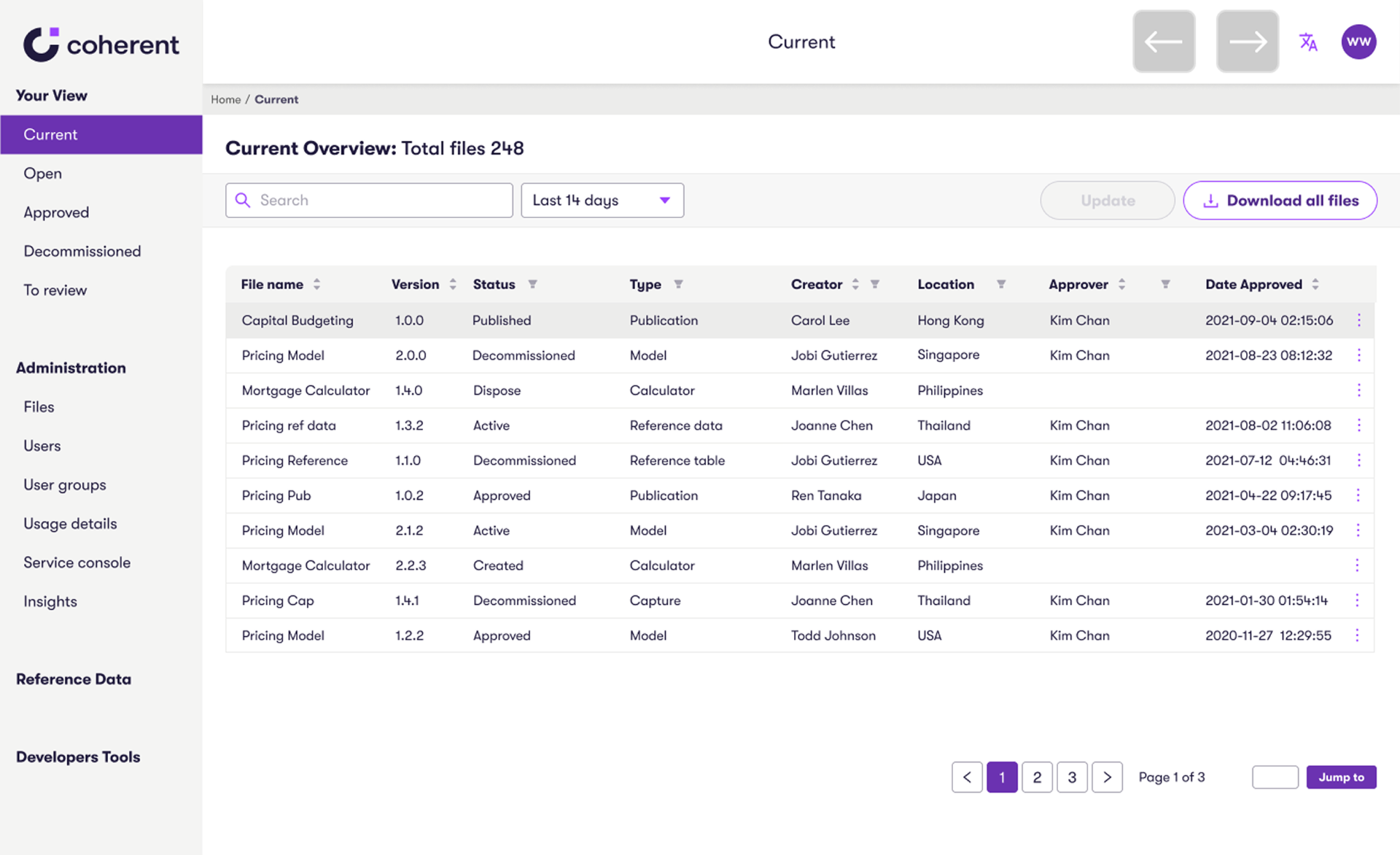
Governance at a glance
The Current Overview gives administrators one auditable table across 248 files — version, status, creator, approver and approval date per model. Provenance isn't a detail view; it's the default view.
Impact
What moved, and by how much.
Faster product-change cycle (quarters → days)
Authoring error rate vs free-form editing
Support escalations during pilot
Actuarial teams onboarded across APAC
“The authoring surfaces made version control feel like a spreadsheet feature, not an engineering one — that's why the actuaries trusted it.”
Product lead — Coherent Spark pilot
Key takeaways
What I'd carry forward.
Familiarity is a feature
In expert tooling, borrowing the incumbent metaphor beats reinventing it.
Trust is cell-level, not screen-level
One un-audited change corrupts the whole tool's credibility.
Guardrails need selling
Actuaries accept structure only after the guardrail proves it helped.